Join us June 26 at Congress Center Hamburg (CCH), during ISC'26

2nd edition of the Workshop

Quantum Resources for Unified Computing Hub

THIS WEBSITE IS A WORK IN PROGRESS

QRUCH is a ISC'26 Workshop focused on middleware dedicated in integrating actual Quantum Computer into HPC compute centers

This “half a day” workshop will address some of these topics as it aims to depict the available pieces of software that will help in integrating an actual quantum computer inside a machine room, making it available to end users.

Overview

QRUCH 2nd Edition

This workshop is a follow-up of the first edition of the QRUCH workshop which took place during ISC'25. This workshop was itself a follow-up to the BoF “Towards Hardware Agnostic Standards in Hybrid HPC/Quantum Computing” at ISC’24.

Quantum Computing is not a completely new topic: it was introduced in 1981 during a conference at MIT, but it really came under the spotlight as Peter Shor released his famous algorithm capable of breaking RSA encryption with tremendous acceleration. The domain remained a bit theoretical, studied in mathematical computer science, until a few years ago when actual Quantum Computers arrived on the market providing real (but yet limited) quantum compute resources. In the very last years, Quantum Computers gained more compute power, and they started to be deployed inside HPC centers while also becoming available on cloud based platforms.

As Quantum Computers leave the laboratories where they were designed and enter the HPC machine room, it becomes necessary to consider how they can be used to perform actual computation on real life use cases. As we are still in the NISQ era, and because HPC resources may help in using Quantum Computers efficiently, the hybrid HPC/QC naturally appeared, providing acceleration similarly to GPU previously.

This is not as easy as it seems. As the hardware becomes ready to be installed in computer rooms, the software stack has not evolved as fast. In particular, the required software stack to “glue” HPC and QC is not fully defined. Solutions exist and are provided by both research institutes and vendors, but they obey no standard.

Current Quantum Computers are provided with a very simple software stack, usually a Python based framework, providing native access to the computing resources as well as a “mock device” providing emulation on standard CPU (and sometimes GPU) compute power. As we consider the integration inside the computer center, many topics, related to system integration as well as application integration are to be considered, such as:

  • authentication and accounting;
  • job scheduling;
  • benchmarking;
  • programming interfaces beyond Python
  • mixing HPC and QC steps to perform actual HPC/QC hybridization

This “half a day” workshop will address some of these topics as it aims to depict the available pieces of software that will help in integrating an actual quantum computer inside a machine room, making it available to end users.

Important dates

  • Workshop on June 26, morning or afternoon (to be announced), during ISC'26

Second Edition

This is the second edition of the QRUCH workshop. It's a follow-up of the first edition of this workshop during ISC'25.

3 sessions

The workshop is composed of 3 sessions: a keynote address, 6 lightning talks and a export panel.

6 lightning talks, in two rounds

The lightning talks will belong to two rounds, separated by the coffee break. Each talk will last 10 minutes plus 5 minutes for Q/A.

Program

QRUCH workshop spans a half day, its agenda is organised as follows (TO BE UPDATED):

Time Topic
14h00 - 14h05 Participants Welcoming
14h05 - 15h00 Keynote Speakers
15h00 - 16h00 Lightning Talks (1st round)
16h00 - 16h30 Coffee Break (synchronised with ISC'25)
16h30 - 17h00 Lightning Talks (2nd round)
17h00 - 17h55 Expert Panel
17h55 - 18h00 Wrap-up and Conclusions
18h00 End of Workshop

Keynote Speakers

program
14h05 Plenary Session

Keynote Address

Travis Humble, director of the Quautun Science Center at ORNL

ADD HERE THE DESCRIPTION OF THE KEYNOTE TALK

Slides of the presentation.

Lightning Talks

program
15h00 Plenary Session

Hybrid Quantum–HPC Integration at BSC: Architectures, Workflows, and Emerging Capabilities

Mar Tejedor (BSC)

The Barcelona Supercomputing Center is actively developing the infrastructure and tooling required to integrate quantum computing into large-scale HPC environments. This lightning talk will present an overview of our ongoing efforts within Qdislib, including distributed quantum circuit cutting, advances in quantum circuit caching strategies, experiments connecting HPC systems with on-site and cloud-based QPUs, and the design of dedicated hybrid schedulers..

Slides of the presentation.

program
15h15 Plenary Session

Multi-Modality Access in a Hybrid Quantum - Classical Computing Environment<>h2>

Krzysztof Kurowski (PSNC)

The deployment of EuroHPC PIAST-Q, a trapped-ion quantum computer integrated with classical high-performance computing resources at Poznan Supercomputing and Networking Center was an important shift toward hybrid quantum-classical infrastructure capable of serving multiple users and diverse computational modalities. With this architecture, users access a unified environment enabling classical CPUs, GPUs and quantum processing units (QPUs) concurrently. By enabling broad access across academia, industry and the public sector, this infrastructure fosters a new class of workflows that exploit multi-modality computing in a shared environment, and accelerating hybrid-quantum application development

Slides of the presentation.

program
15h30 Plenary Session

Evaluating the impact of Malleabilty for HPC-QC jobs scheduling on Leonardo

Sara Marzella (CINECA)

The integration of quantum computers within classical High-Performance Computing (HPC) infrastructures is receiving increasing attention, with the former expected to serve as accelerators for specific computational tasks. Differences in hardware architectures, communication models, and programming workflows introduce nontrivial integration issues. Even more critically, the scarcity of quantum devices, especially compared to the large number of classical nodes in modern HPC systems, creates an inherent scheduling bottlenek. We propose a novel malleability-based approach to optimize resource utilization in hybrid HPC–quantum workloads. This dynamic strategy enables workloads to adjust their resource footprint at runtime depending on the availability of quantum resources.

Slides of the presentation.

program
15h45 Plenary Session

ABCI-Q: A Next-Generation Hybrid Computing Infrastructure Integrating AI, HPC, and Quantum Computing

Ryousei Takano (AIST)

While the convergence of AI and HPC continues to accelerate, quantum computing is emerging as a new computational resource. ABCI-Q is a unique hybrid platform that integrates a GPU-based AI supercomputer with three types of quantum computers — superconducting, neutral atom, and photonic. This talk introduces the concept, implementation, and current status of ABCI-Q, highlighting its role as a prototype for future AI–quantum–HPC integration and discussing the emerging challenges and opportunities in hybrid computing.

Slides of the presentation.

16h00

** 30 minutes break (synchronised with ISC'25 break) **

program
16h00 Plenary Session

Coffee Break

Coffee Break (synchronised with ISC'25 coffee break)

program
16h30 Plenary Session

Decomposition of hybrid optimization problems in maritime logistics

Valeria Bartsch (Fraunhofer CML)

Optimization problems are ample in maritime logistics and especially for mixed integer linear problem formulations depend a lot on the modelling. Thus, domain expertise is needed in order to find a realistic problem definition while keeping the current limitations of the QC hardware in mind. I will present for several important optimization problems in maritime logistics decomposition methods as the Benders decomposition, its advantages and the requirements these hybrid workflows pose on the QC/HPC hardware.

Slides of the presentation.

program
16h45 Plenary Session

JUNIQ HPC-QC integration: Current implementation and some thoughts on future implementations.

Carlos Gonzalez (FZJ)

This talk introduces the Juelich UNified Infrastructure for Quantum computing (JUNIQ), gives an overview of the currently available QC hardware and the ongoing HPC-QC integration efforts at JSC and closes with some thoughts on how future implementations of HPC-QC integration could look like.

Slides of the presentation.

program
16h45 Plenary Session

EuroQHPC-Integration

Félix Givois (GENCI)

The EuroQHPC-Integration project is funded by EuroHPC. It is coordinated by GENCI, brings together 30 partners, spread across 17 European countries, and relies on 6 quantum computers with various architectures (neutral atoms, superconducting qubits with different topologies, quantum annealing, photonics, trapped ions) that will be coupled with 6 European supercomputers forming an unprecedented hybrid HPC/QC infrastructure. This topic will highlight the main topics of this project.

Slides of the presentation.

Expert Panel

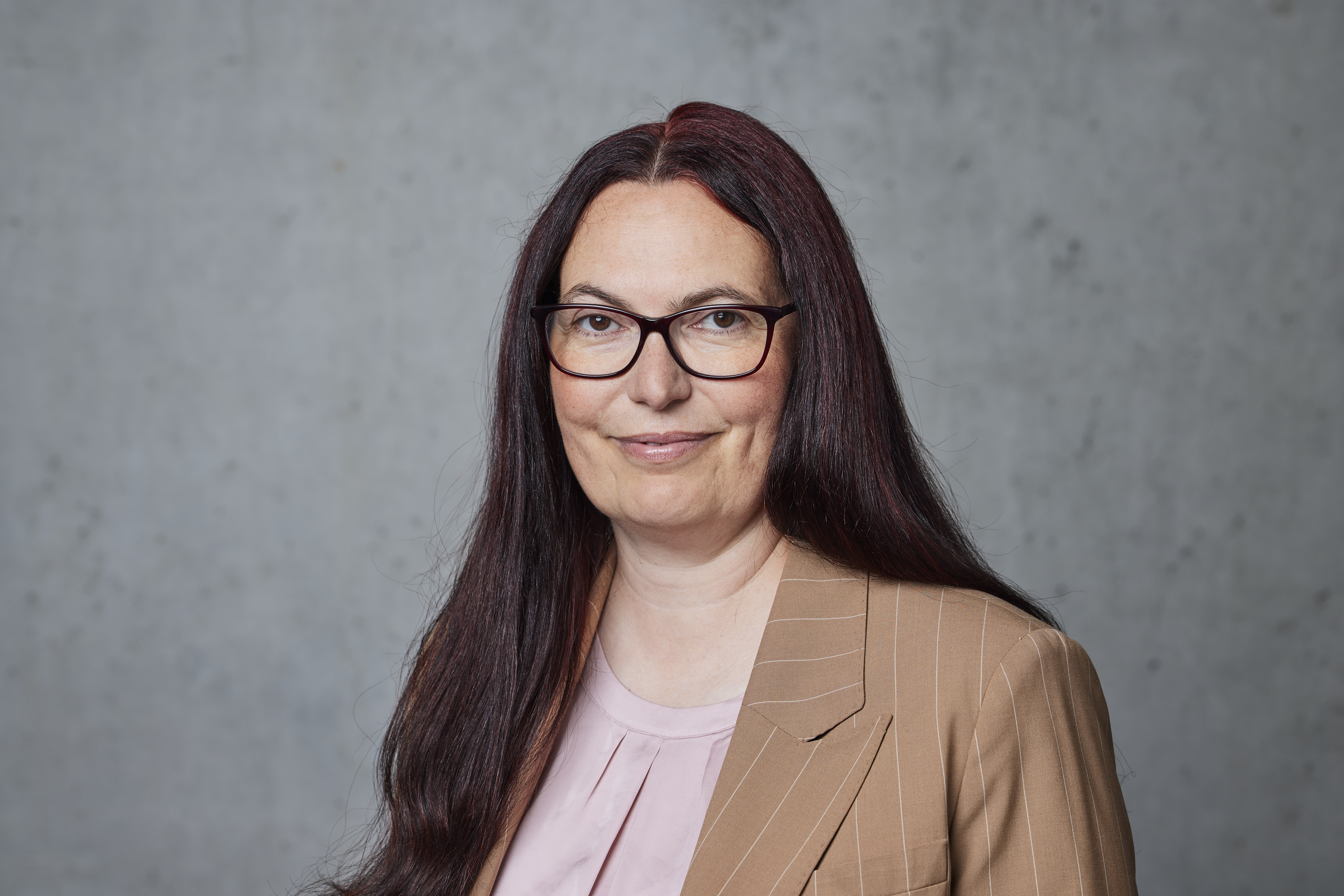
Valeria Bartsch

Valeria Bartsch

Fraunhofer CML

Valeria Bartsch is a senior scientist at the Fraunhofer Center for Maritime Logistics in Hamburg. She has been with Fraunhofer since 2013 starting with High Performance Computing and Quantum Computing at Fraunhofer ITWM in Kaiserslautern before changing to Maritime Logistics in 2024. Previously, she worked has held postdoctoral positions at the University of Sussex, University College London, Fermi National Accelerato Laboratory in Chicago and the University of Oxford, where she contributed to various high-energy physics projects. Valeria holds a Ph.D. from Universität Karlsruhe and a Physics diploma from the Universität Dortmund.

Expert

Krzysztof Kurowskii

PSNC

Krzysztof Kurowskii holds PhD in computer science from Poznań University of Technology. He recently served as Technical Director of the Poznań Supercomputing and Networking Center (PCSS) and is currently the Head of the Quantum Technologies Department. For the past two decades, he has been involved in national and international research and development projects in the field of ICT and its application across various domains. He has gained international experience as a research visitor at several institutions, including the University of Queensland and Argonne National Laboratory. His research interests focus on modelling advanced applications, serialization, and task management challenges in modern supercomputing systems, including hybrid classical supercomputers and quantum computing platforms. More recently, he has been involved in the development of the national quantum computing infrastructure in Poland and is coordinating the EuroHPC EuroQCS-Poland consortium r esponsible for the deployment of a trapped-ion quantum system called Piast-Q and its integration with PCSS supercomputing facilities.

Expert

Sara Marzella

CINECA

Sara Marzella is Senior Scientific Application Engineer in HPC and Quantum Computing at the Quantum Computing LAB of CINECA. Graduated in Applied Mathematics with a thesis on mathematical methods for machine learning, she specializes in the integration of Quantum Computers with Supercomputers, focusing on the development of hybrid algorithms and the optimization of both classical and quantum computational resources. A strong advocate for science outreach, she actively participates in national and international events to promote accessibility in Mathematics and Quantum Computing. She contributes to national and European projects on HPC–Quantum integration, advanced training programs, and the coordination of research and development initiatives.

Expert

Venkatesh Kannan

ICHEC

Venkatesh Kannan works as Technical Manager at the Irish Centre of High-End Computing (ICHEC), the national centre for high-performance computing (HPC) in Ireland, whose core mission is to deliver HPC-related capabilities and expertise to higher education institutions, enterprises and public sector organisations on behalf of the Irish State. At ICHEC, Venkatesh is responsible for defining and implementing the vision, strategy and roadmap of the Centre’s technological solutions.

Steering Committee

Expert

Suzanne Talon

Calcul Québec

Suzanne Talon, CEO of Calcul Québec, holds a PhD in astrophysics from Université Paris VII, specializing in solar and stellar physics. As a researcher and educator, she advanced numerical models and taught at Université de Montréal and Sherbrooke. Since 2007, she has spearheaded HPC initiatives; she helped unify Quebec universities to establish Calcul Québec, which provides cutting-edge research computing infrastructure, including HPC and quantum resources, bolstering innovation and discovery.

.
Expert

Ariana Torres

SURF

Ariana Torres-Knoop has a background in Physics, with a focus on computational, atomic scale and statistical physics. She did her PhD (cum-laude) in computational chemistry group at the University of Amsterdam. In 2019 she joined SURF, the IT collaboration for research and education in the Netherlands, as an HPC and Quantum Computing advisor. She currently is leading the Quantum Computing efforts at SURF.

Expert

Venkatesh Kannan

ICHEC

Venkatesh Kannan works as Technical Manager at the Irish Centre of High-End Computing (ICHEC), the national centre for high-performance computing (HPC) in Ireland, whose core mission is to deliver HPC-related capabilities and expertise to higher education institutions, enterprises and public sector organisations on behalf of the Irish State. At ICHEC, Venkatesh is responsible for defining and implementing the vision, strategy and roadmap of the Centre’s technological solutions.

Expert

Philippe Deniel

CEA/DAM

Philippe Deniel is a CEA research engineer and Fellow expert specializing in high-performance computing (HPC). A 1996 École Centrale Paris graduate with a 2023 PhD from Université Paris-Saclay, he has worked at CEA since 1998 and led massive HPC storage teams from 2015 to 2023 at CEA/DIF and TGCC. His expertise covers hierarchical storage, parallel file systems, and HPC/quantum hybridization.

People involved in this workshop

Venue

the Workshop will take place at CCH Hamburg during the ISC High Performance 2026 Conference near the Dammtor train station in Hamburg, Germany

CCH Hamburg

Messeplatz 1, Hamburg, Germany 20355

Travel information to CCH

Past Editions

This is the second edition of the QRUCH workshop.

The first edition took place during ISC'25 in Hamburg.

>

This workshop is originally a follow-up to the BoF “Towards Hardware Agnostic Standards in Hybrid HPC/Quantum Computing” at ISC’24.

Register to QRUCH mailing list

Send result message will display here